It used to be ‘impossible’ to legally use published songs, but it no longer has to be if proper steps are followed, and that is the basis for this piece. If you’ve ever considered doing a cover song, sampling, or interpolation, there are some hurdles you must cross to achieve that hit. If you must know, there is a thin line between landing a hit and getting hit by lawsuit — you get a hit either way, and I’m not just playing with words.
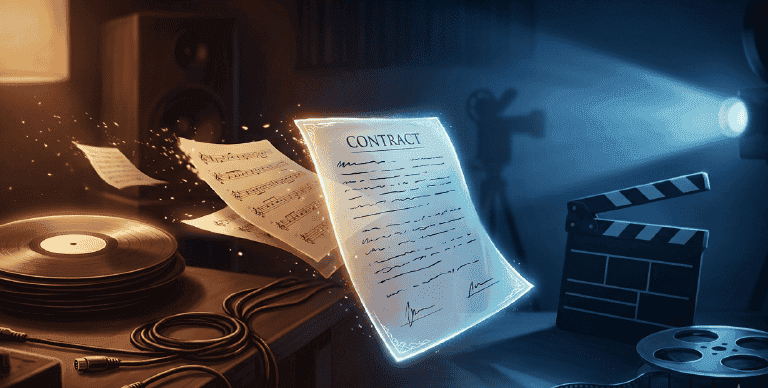
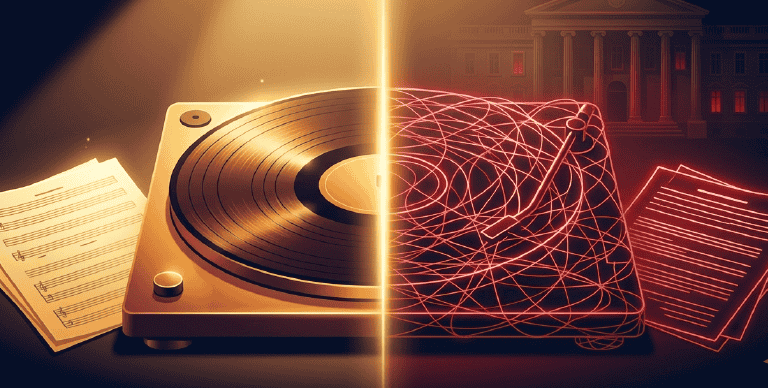
Almost every question about using someone else’s music comes down to one distinction: a song is actually two separate copyrights stacked on top of each other: The Master and the Composition. The Master is the specific recorded performance — the actual audio file owned by a label or the artist themselves. The Composition is the underlying song: the melody, lyrics and chord structure owned by the songwriter and their publisher.
Whether you need permission from one owner, the other, or both depends entirely on which piece of the song you’re touching. That single distinction is the thread running through all eight paths below.
The 8 Legal Paths for Using Already Published Music
1. The Standard Cover Song (The Mechanical License Route)
Re-recording a song exactly as it was written, your own vocals, your own instrumentation, but the same melody and lyrics doesn’t require the songwriter’s permission at all. The U.S. copyright laws have a built-in compulsory mechanical license: once a song has been commercially released, anyone can record and distribute their own version, provided they pay the required royalty.
If you’re wondering how to release a cover song legally. Best option is probably through your distributor. The likes of DistroKid, CD Baby and TuneCore etc handle mechanical licensing automatically, deducting the fee from your streaming payouts before you ever see them. It’s a shortcut to fame and the most legally straightforward path on this list but the one most producers and artists underuse out of unnecessary caution.
2. Music Interpolation (Re-playing the Composition)
Interpolation sits one step away from a cover: instead of performing the song as written, you re-record or replay a piece of its melody or lyric, hook, bassline, or turn of phrase inside a new composition. Because you’re generating brand-new audio rather than reusing the original recording, you only need to clear the composition.
The Master owner never enters the picture. Here’s the catch producers often miss: unlike a straight cover, interpolation isn’t covered by a compulsory license. The publisher isn’t obligated to say yes, and if they do, they can negotiate whatever terms they want, including a much larger share of the new song’s publishing than you’d expect. The legal right to ask for a deal is not the same as the right to get one on reasonable terms.
Nicki Minaj learned this the expensive way when Tracy Chapman refused to clear an interpolation of “Baby Can I Hold You” for Minaj’s song “Sorry” The track leaked anyway and Minaj ultimately settled for $450,000 rather than face trial.
If you’re wondering how to release a cover song legally. Best option is probably through your distributor.
3. Traditional Sampling (The Dual Clearance Process)
The difference between sampling and interpolation is that a sample pulls the actual audio from an existing recording, not replaying it, but reusing it. That single choice doubles your workload. Because you’re touching both the Master and the Composition, you need two separate sign-offs: a Master License from whoever owns the recording (usually a label) and a Publishing License from whoever owns the song underneath it (usually a publisher).
A sample is never legally cleared with just one signature. And sometimes, even with money on the table, clearance doesn’t happen. A label or publisher can simply decline or price the sample out of reach entirely. Producers who build an entire track around uncleared or improperly cleared sample often learn the hard way. The De La Soul/Tommy Boy/Reservoir Media drama is a good reference.

4. Pre-Cleared Subscription Platforms (Splice, Tracklib, Loopcloud)
Subscription-based sample and loop libraries have become the low-friction alternative to the clearance grind. Platforms like Splice, Tracklib, and Loopcloud license their entire catalogs upfront, so the royalty-free terms are baked into your subscription agreement the moment you download a sound. There’s no negotiation, no waiting on a label’s legal department, and no risk of a surprise claim later provided you’ve read the platform’s specific usage terms, since “royalty-free” doesn’t always mean identical rights across every service.
Personally, i dont’t touch royalty free sample libraries like Splice. If the progression i desire is beyond me, i’d rather find a collaborator or session artist/instrumentalist. The problem i often imagine with this pre-cleared path is when multiple producers or artists end up using same sample in different recordings and one ended up “blowing” while the others didn’t; what would be their fate?
5. Public Domain Music Rules (2026)
Under current U.S. copyright term rules (2026), compositions published in 1930 or earlier, early jazz standards, folk melodies, and classical works are now in the public domain and free to use without permission. That includes plenty of recognizable material. But there’s a trap hiding inside this freedom: public domain status applies to the composition, not necessarily to every recording of it.
You’re free to write your own new arrangement of a 1928 melody. You are not free to sample a modern orchestra’s 2020 recording of that same melody; that recording carries its own, very much active, Master copyright.
6. Creative Commons Music Licenses & Open-Source Audio
Creative Commons licensing gives independent creators a legal way to share and reuse audio outside the traditional label system, but the license type matters enormously. A track marked CC-BY generally just requires attribution. One marked CC-BY-NC restricts you to non-commercial use only, which matters a great deal if you’re placing music in a paid project. Before using anything from platforms like SoundCloud or Freesound, check the specific license tag attached to that file rather than assuming all Creative Commons content works the same way.
7. The Official Label Remix or Commissioned Work
Occasionally the clearance question disappears entirely because the rights holder brought you in directly. Authorized remixes and commissioned work typically operate under a work-for-hire agreement: the label hands you the isolated master stems, and the contract itself defines exactly what you can do with them. This is the cleanest path of the eight, legally speaking, since permission was built into the relationship from the start rather than negotiated after the fact.
8. Clearing for Sync: Why Music Supervisors Raise the Bar
Everything above assumes you’re releasing music through standard channels: streaming, downloads and physical sales. Sync licensing plays by a more strict version of the same rules. A sample that’s technically cleared for a Spotify release can still get rejected outright by a music supervisor because sync deals require a clean, documented chain of title — a clear paper trail showing exactly who owns what, with no ambiguity whatsoever in the chain.
Productions typically carry Errors & Omissions insurance, and insurers won’t underwrite a project containing music with any unresolved rights questions, however minor. In sync, “cleared” isn’t a finish line; it’s the minimum bar just to get considered.

How Things Play Out on YouTube, TikTok and Instagram
Everything above governs the legal right to use a song. Social platforms add a second, messier layer: whether that right has already been pre-cleared and under what conditions. It’s commonplace now to see videos flagged, demonetized, or removed for copyright violations even for songs you thought were already cleared.
TikTok runs a two-tier system. Personal creator accounts get broad access to a music library built on blanket deals with major labels. Business accounts, however, are restricted to a separate Commercial Music Library, and even those tracks are typically licensed for use on TikTok only.
On Instagram if you pull a song from Meta Sound Collection for a video post or reel on your personal account, it may be illegal to use that same song for your business account (even though you already owned it.)
One instructive case: a major European football club posted celebration content using a track from Instagram’s own library, assumed business-account access meant proper licensing, and racked up seven million views before publishers argued the club still needed separate synchronization rights for commercial use.
The pattern across every platform is the same: access is not a license, and a license rarely travels between platforms. A track cleared for a TikTok post isn’t cleared the moment that same video gets reposted to Instagram or YouTube.
The Master is the specific recorded performance — the actual audio file owned by a label or the artist themselves. The Composition is the underlying song: the melody, lyrics and chord structure owned by the songwriter and their publisher.
Summary Matrix: Clearance Requirements at a Glance
| Framework | Master Clearance | Composition Clearance |
|---|---|---|
| 1. Cover Song | No | No (compulsory license) |
| 2. Interpolation | No | Yes (negotiated) |
| 3. Traditional Sampling | Yes | Yes |
| 4. Subscription Platforms | No (pre-cleared) | No (pre-cleared) |
| 5. Public Domain | Depends on recording used | No (if pre-1930) |
| 6. Creative Commons | Check specific license | Check specific license |
| 7. Label Remix / Commission | No (pre-authorized) | No (pre-authorized) |
| 8. Sync Licensing | Varies | Varies |
Some Frequently Asked Questions I’ve Seen
Do I need permission to cover a copyrighted song on YouTube?
Generally no, if it’s a faithful cover. YouTube’s Content ID system and its licensing deals with publishers typically route royalties automatically. Straying significantly from the original melody or lyrics can push it out of that automatic coverage.
Can I use music from TikTok or Instagram’s built-in library for my brand?
Only if you’re pulling from their separate Commercial Music Library. The general creator library is licensed for personal, non-commercial use only.
How do I get permission to use a song in a short film?
This falls under sync licensing. You’ll need direct clearance from both the publisher and the master owner, since automatic platform licenses don’t cover film or video projects.
Is it legal to cover a song live?
Live performance is governed by a separate right (public performance) collected through Performing Rights Organizations like ASCAP, BMI, or SESAC rather than the mechanical license that covers recordings. Performances must be reported by the artist or venue. Without this, the performance has become an infringement of copyright holders rights.
Does crediting the original artist protect me legally?
No. Attribution is a courtesy, not a license substitute. It has no legal effect on an infringement claim.
Conclusion: Protecting Your Creative Assets
Build Safely, Monetize Intelligently
Understanding these eight paths isn’t about limiting your creativity — it’s about protecting the income that creativity is supposed to generate. A track built on a legally shaky foundation can still get streams and still get attention, right up until it can’t get paid or gets pulled entirely. Clearing your rights properly is what lets your music actually earn for you long-term, including opening the door to sync placements that pay far better than streaming ever will.
A Quick Look Ahead: AI and the Next Sampling Fight
One development worth watching: AI-trained and AI-generated music is beginning to test this same Master-and-Composition framework in court, as artists and labels argue over whether training on existing recordings constitutes a new kind of unauthorized use. Nothing here is settled law yet, but it’s the next chapter of the same clearance conversation producers have always had to have.
Actionable Next Steps for Independent Artists
Before you submit your next project to a distributor, audit it against this list. Know exactly which of these eight categories every element of your track falls into, and make sure the paperwork matches the rules behind how to legally use published songs.
If you like this piece, you may also want to check out other ones like Your AI Music Might Really Not Be Yours and maybe, 7 Reasons Why You Need a Solid Music Marketing Strategy As an Artist. Until the next one.