Recently, while conducting keywords research, I stumbled on the phrase “google ads for music artists” and the cost per click stopped me cold; that was the original inspiration for this piece. As at time of drafting this, niche marketing terms in this category routinely run past $100 a click, even at very small search volumes. That number exists because of who is bidding on it: agencies and DIY marketing platforms competing for artists willing to pay a monthly retainer. It is a lucrative category for the ad sellers, and a far less certain bet for the artist writing the cheque.
The pitch is seductive because it looks like control. Pour money in, and watch streams, followers, or pre-save numbers move. But that movement is rented, not owned. The moment the budget stops, so does the lift. This is why the debate over sync licensing vs paid advertising even came up at all, especially for anyone weighing a real artist marketing budget for the first time.
How does sync even come up? Why do I think sync outperform ads — Google ads, Pandora music advertising, and every other paid channel at the one job they exist to do? Sync licensing vs paid advertising is an attempt at explaining this. Four reasons stand out; stay with me till the end.
| Sync Licensing | Paid Advertising | |
|---|---|---|
| What it buys | A permanent placement inside someone else’s finished work | Attention for as long as the budget runs |
| Duration of impact | Ongoing, sometimes for decades | Stops when spend stops |
| Cost structure | Upfront or backend fee, one placement | Ongoing spend, priced per click or impression |
| Catalogue effect | Often lifts adjacent tracks, not just one song | Rarely moves anything beyond the promoted track |
| Best suited for | Long-term catalogue value and composer/publisher revenue | Release-day pushes and retargeting existing fans |
| Case study | Two Steps From Hell, Lizzo, Feist, The Black Keys | Google, Pandora, Spotify, YouTube ad platforms |
Reason 1: Sync Placements Are Owned, Paid Ads Are Rented
Attention You Rent vs Placement You Keep
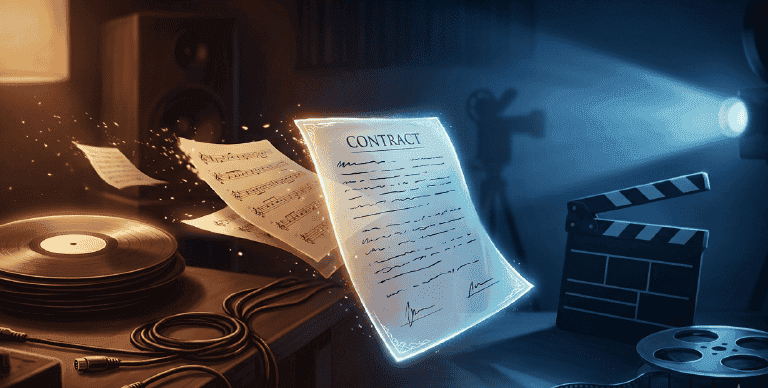
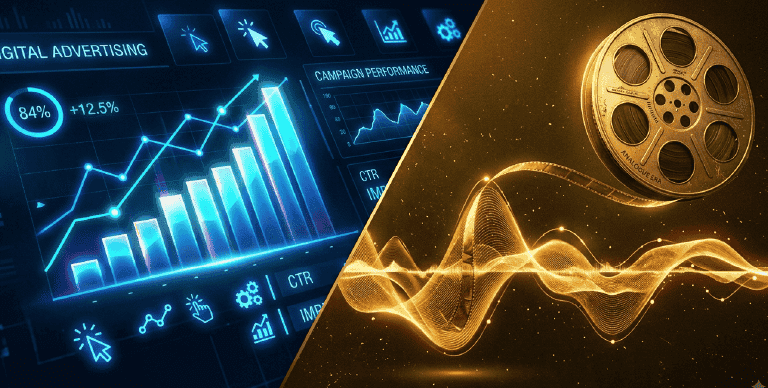
Paid advertising buys attention for a fixed window. You pay by the click or impression, and the exposure stops the moment you stop paying. Sync buys something different: a permanent placement inside someone else’s finished work. Every time that film, shows, or advert airs, the placement keeps generating exposure on its own. An advert stops working when the invoice does. A sync placement keeps earning for as long as the underlying content stays in circulation, sometimes for decades.
The Asset You’re Actually Building
This is not simply a cheaper alternative to ads. It changes what kind of asset the artist or composer is building. Ad spend buys a spike. Sync buys placement equity that sits inside someone else’s distribution machine, a machine the artist never had to pay to build. That distinction is what sync placements for music discoverability really come down to: one path rents attention, the other owns it.
Reason 2: Sync Has Launched Careers Advertising Budgets Could Never Match
The clearest way to see the gap is to look at what sync licensing has done for artists at every career stage. Some acts were built entirely around licensing. Others were already household names who leaned on sync years before mainstream success arrived. Each case below shows sync licensing for independent artists and superstars alike doing music discoverability work no ad budget managed alone.
Two Steps From Hell
I studied Legend (2015) and Legacy Anthology (2019) albums for over 6 months. By every measure, this is the purest case of music composition system never built around streaming numbers or ad spend at all. Two Steps From Hell (TSFH) was founded in 2006 by composers Thomas Bergersen and Nick Phoenix. Their purpose was writing trailer music demos to license within the film and television advertising industry, distributed through their partner Extreme Music. There was no radio strategy and no paid marketing plan. The business model was sync, period!
Paid advertising buys attention for a fixed window. You pay by the click or impression, and the exposure stops the moment you stop paying.
Their tracks scored trailers for franchises including Harry Potter, Pirates of the Caribbean, Star Trek, and Twilight. Their music became instantly recognisable to audiences who had no idea who wrote it.
The fanbase came after the licensing success, not before it; public demand for the demo tracks pushed Bergersen and Phoenix to release Invincible (2010) and Archangel (2011), their first commercial albums, built from music already proven inside the sync market. They sold over 300,000 album copies on iTunes alongside continued licensing revenue, all without chasing music discoverability through paid channels.
The Black Keys
Not every act starts with sync as the plan; some arrive at it after paid promotion fails. The Black Keys spent years struggling for radio airplay and came out of a European tour roughly $3,000 in debt. Rather than pour money into advertising, they turned to licensing, landing their first placement with “Set You Free” in a Nissan commercial. From there, the duo built one of the most extensive sync catalogues in modern rock, eventually licensing over 300 songs to television, film, adverts, and video games.
Lizzo
From 2016 onward, Lizzo’s catalogue moved through a steady run of brand and screen placements: national spots for AT&T’s DirecTV Now, Cadillac, and WW, alongside appearances in Broad City, Shameless, The Bold Type, Girls Trip (2018), I Feel Pretty (2018), and Blockers (2018).
She has credited “Good as Hell” landing in Barbershop: The Next Cut (2016) as the placement that introduced her to a new audience. Even her breakout, “Truth Hurts,” followed the same pattern: it underperformed on release in 2017 and only found its audience after a placement in Someone Great (2019) coincided with a social media moment, well before any paid campaign entered the picture.
I didn’t know who Lizzo was until I heard “Special.” I immediately noticed the button ending — an important feature of a good cue. Sting/button ending simply means sudden or instant ending to a song. It is the short, clean act-out moments that make a cue effortless to cut to picture; an hallmark of music built with placement in mind, whether by design or instinct. Most of Lizzo’s songs consistently use this feature.
Feist
Feist’s case shows how fast a single sync can outperform any ad budget. She was a respected indie artist with a modest following when “1234” was placed in a 2007 Apple iPod commercial. The exposure turned her into a household name almost overnight, leading to Grammy nominations and performances on Saturday Night Live and The Late Show. No google ads for music artists campaign built around her own name could have produced that at any price.
Reason 3: Sync Placements Lift the Whole Catalogue, Not Just One Track
The real value of sync rarely shows up in a single track’s numbers. It shows up in what happens to the rest of the catalogue afterwards. The better test compares catalogue-wide streaming, saves, and playlist adds before a placement against the weeks after. A strong sync tends to lift adjacent songs, not just the one licensed. Paid ads rarely do this; spend on one track rarely moves the rest of the catalogue, no matter how well the artist marketing budget is targeted. This catalogue-wide lift is one of the most overlooked parts of music discoverability, and it rarely shows up in any Google ads for music artists case study.
The clearest way to see the gap is to look at what sync licensing has done for artists at every career stage.
Reason 4: Sync Compounds Indefinitely While Ad Spend Resets to Zero
This compounding quality is why sync licensing revenue keeps climbing industry-wide. It reached roughly $650 million globally in 2024, marking four straight years of growth. Sync is not a marketing tactic bolted onto a release. It is infrastructure that keeps paying out long after a paid campaign’s invoice would have stopped. This is one more reason sync licensing for independent artists deserves more attention than most marketing guides give it, and one more reason sync licensing vs paid advertising is not really a fair fight over the long run.
When Paid Ads Still Earn Their Keep
None of this makes paid advertising useless. It makes it situational. Ads still do a job sync cannot touch. Some of these situation include:
Release-Day Amplification
Sync placements take months, sometimes years, to land. If a single or album drops this Friday, ads are the only lever fast enough to matter. Spotify’s Ad Studio and YouTube’s in-stream and Demand Gen formats are built for exactly this kind of short-window push, and both have made spotify ads for musicians and youtube ads for musicians genuinely accessible on a small budget.
Retargeting an Existing Fanbase
Google, Pandora, Spotify, and YouTube ads are all efficient at reaching people who already know the artist, reminding fans that a new release exists. Sync is built for discovery among strangers, not retention among fans; that difference matters more than most marketing advice admits.
Geo-Targeted Promotion
A tour date or local show needs an audience in a specific place at a specific time; sync has no mechanism for that. This is one area where even a modest Pandora music advertising buy will always outperform a licensing strategy.
Amplifying a Proven Placement
Once a sync has demonstrated that a track resonates, a modest ad spend layered on top can extend that momentum. Whether it runs through spotify ads for musicians or a YouTube ads for musicians campaign, the goal is the same: amplify a result sync already proved, rather than gamble on creating one from nothing.
The mistake is not spending on ads. It is spending on ads to manufacture discoverability that sync could have earned for free, or at a fraction of the cost, given time.
What This Means for Composers and Publishers
For composers and publishers, this changes where effort belongs. A sync-ready catalogue does real work toward music discoverability on its own, work no artist marketing budget can fully replace. It needs to be cleanly split, properly metadata-tagged, mixed to broadcast standard, and built with clean edit points, all of which starts with having the right producer contracts in place before a track ever reaches a music supervisor.
Done well, it earns the discoverability an ad budget is usually asked to buy, and keeps earning it indefinitely. This is the strongest case for sync licensing for independent artists and established names alike: the catalogue itself does the marketing.
That is the premise behind building a catalogue for licensing, rather than a fanbase propped up by ad spend: the placement becomes the marketing. Understanding why owning the song isn’t enough is where that catalogue strategy really begins.
Paid ads buy visibility for as long as the budget lasts; sync buys velocity that keeps compounding after the deal closes. For composers and publishers, the sync licensing vs paid advertising question isn’t close once you weigh what each one leaves behind.