You uploaded your new single to DistroKid, TuneCore, or CD Baby. You ticked the box for “Worldwide Distribution,” watched your Spotify for Artists dashboard light up, and saw your first streaming pennies arrive. You feel protected, professional, and fully set up.
But you are standing in a financial illusion. The hard truth: standard digital distributors only collect a portion of your total royalty pie, while a global network of collection agencies sits on unclaimed music royalties your music has already generated.
This side of music can be boring and complicated; not many artists even bother. Ultimately, you’re simply giving away your money ignorantly. This piece is more or less a guide that breaks down the multi-million-dollar global pipeline known as the “Black Box” and expose the 7 hidden doors where artists without structured labels/independent artists routinely leave up to 50% of their potential income unclaimed.
Music Distributor Limitations: The Illusion of “Global Distribution”
The DIY era has convinced artists that distribution is a one-stop-shop, that a single distributor manages everything. In reality, a song is legally split into two distinct assets:
The Master Recording: The specific audio file you recorded, exported, and uploaded.
The Underlying Composition: The lyrics, melody, chords, and musical structure.
Your distributor’s job is to push your Master Recording to DSPs like Spotify and Apple Music, collect master royalties, and pay you back while remaining completely blind to the Composition side. It’s one of the clearest music distributor limitations in the whole ecosystem.
If you are only using a standard distributor, you are leaving the entire publishing side of your music completely uncollected. For a fuller breakdown of how these two assets move through the licensing pipeline, see an earlier piece, “Code, Cash, and Chords” — worth a read if you haven’t split your masters from your compositions on paper yet.
What Is the Black Box Trap in Music?
Are My Royalties Being Lost? Quick Signs to Check
When your music is streamed, broadcast, played live, or synchronised overseas, foreign collective management organisations (CMOs) collect composition and performance royalties on behalf of the creators.
But if those organisations look in their databases and cannot match your music’s metadata to a registered songwriter and publisher, those funds cannot be distributed. Instead of waiting forever, these unpaid pools enter the global “Black Box” — the black box trap this guide is named after.
The DIY era has convinced artists that distribution is a one-stop-shop, that a single distributor manages everything. In reality, a song is legally split into two distinct assets:
Every country has a statutory holding window, often 18 to 36 months. Once that timer runs out, unclaimed royalties aren’t returned to the streaming services or kept in a vault, they’re declared “unclaimable” and redistributed to the top-earning local labels and charting artists based on market share.
In plain terms: your earnings are actively funding major-label marketing campaigns because your global registry is incomplete.
Unclaimed Music Royalties: How the Numbers Add Up
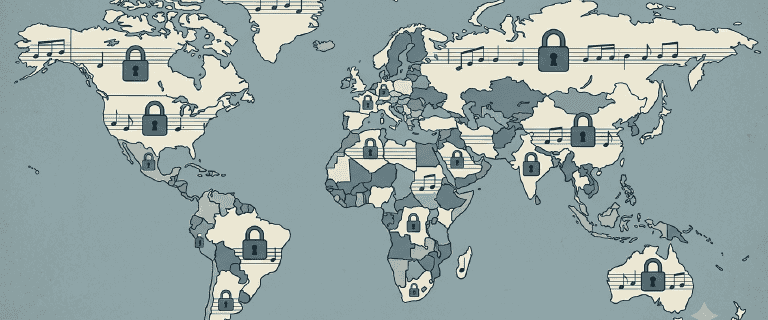
Global music trade groups estimate that the annual black box accrual sits between $300 million and $500 million dollars worldwide. Let’s look at the 7 specific doors where your money is leaking into this system.
Door #1: Songwriter vs Publisher Royalties (The Unclaimed 50%)
Many independent songwriters believe joining a PRO like ASCAP or BMI means they’re fully protected. Full protection actually depends on understanding songwriter vs publisher royalties — two halves of the same payment.
However, all performance royalties are split cleanly down the middle: Total Performance Royalty = Songwriter Share (50%) + Publisher Share (50%).
The Songwriter’s Share: This is paid directly to you as the creator.
The Publisher’s Share: This is paid to your publisher or publishing administrator.
If you’ve registered with ASCAP or BMI as a writer but haven’t set up a “Vanity Publishing” entity or a deal with a Publishing Administrator (like Songtrust or Sentric), that publisher share of 50% sits in limbo. Some PROs hold it temporarily, but most international publishing money never makes it back to your account.
Door #2: The MLC Streaming Mechanicals and International Gaps
Every stream generates a Mechanical Royalty alongside the standard performance royalty — the fee paid for “reproducing” your composition. For perspective on money paid to original song owner, read Ways to Legally Use Published Songs.
In the US, The Mechanical Licensing Collective (The MLC) collects and pays these streaming mechanicals but its authority is strictly domestic.
If you have listeners in the UK, Germany, Brazil, or Japan, those mechanicals are instead collected by foreign MROs like MCPS or GEMA. Standard distributors can’t pull this money, and The MLC doesn’t collect it internationally. Without a publishing administrator registering your songs in those regional systems, your overseas royalties sit directly in the foreign black box trap.
Door #3: Global Neighboring Rights
US-based artists typically use SoundExchange to collect digital performance royalties from non-interactive platforms like SiriusXM and Pandora; essential, but it only secures master performance rights within American borders.
Outside the US, terrestrial AM/FM radio, TV networks, and public establishments are legally required to pay performance royalties to performers and master owners whenever a record is played. This is global neighboring rights territory, and most independent artists have zero representation in it.
SoundExchange vs PPL: Where the Line Gets Drawn
Because the US does not charge traditional AM/FM radio stations for these performance rights, reciprocal agreements often fall flat. If your music receives radio play or viral traction in the UK or Europe, SoundExchange cannot automatically collect those terrestrial broadcast fees. To claim them, you must establish direct or administrative representation with foreign neighbouring rights societies like PPL in the UK or SENA in the Netherlands.
In plain terms: your earnings are actively funding major-label marketing campaigns because your global registry is incomplete.
Door #4: Live Performance Royalties (PRO Live Programs)
Every venue, from a basement pub to a stadium, pays blanket licensing fees to local PROs. What most songwriters don’t realise: they’re entitled to a share of those fees whenever they perform their own compositions.
If you play a live set of your own songs, your PRO owes you a performance royalty. However, this is not tracked automatically by Shazam or the venue.
To claim this money, you must manually log your tour dates, venue details, and precise setlists through programs like BMI Live or ASCAP OnStage. If you perform consistently throughout the year, neglecting this step means leaving hundreds of dollars on the table for live performances you already played.

Door #5: Micro-Sync Royalties on TikTok and UGC Video
Short-form video dominates the creator economy, and platforms like TikTok, Instagram Reels, and YouTube Shorts rely heavily on audio clips.
When your music is used in user-generated content (UGC), it generates micro-sync royalties — the TikTok and Reels equivalent of a sync fee. Most artists check the YouTube Content ID box and assume that covers all visual platforms.
But video platforms use a split-payment model similar to streaming: they owe money to the master recording and separate performance and mechanical royalties to the composition. While your distributor collects the master recording pennies, the publishing pennies generated by millions of TikTok views or Instagram Reels are frequently lost without an active publishing administrator tracking down the micro-sync mechanical splits.
Door #6: In-Store and B2B Background Music
Walk into a franchise gym, retail store, or hotel lobby and you’ll hear music playing — not from a personal Spotify account, but from specialised B2B curators like Soundtrack Your Brand, Rockbot, or Mood Media.
These B2B music services pay licensing fees, but they report their actual play data using advanced acoustic fingerprinting databases managed by organisations like BMAT or Audible Magic.
If your music is added to a popular retail playlist but your acoustic fingerprints haven’t been delivered to these central registries, the system can’t match the broadcast to your catalogue — a metadata for musicians problem playing out at industrial scale. The royalty is generated, but with no owner to assign it to, it drifts into the black box pool. I have a piece on how to properly prepare metadata for your songs in the works.
Door #7: The Reciprocal Agreement Delays
Without a publishing administrator, you’re relying entirely on “reciprocal agreements” between your domestic PRO and international collection societies — BMI’s treaty with PRS in the UK, PRS’s treaty with GEMA in Germany, and so on.
These treaties exist, but the process is slow: royalties pass through multiple organisations, each taking an administrative fee, delaying payout by months or years.
How International Music Collection Societies Talk to Each Other
Because foreign databases do not communicate perfectly, metadata matches are frequently dropped in transit. Direct registration with international hubs via a single global administrator is the only way to bypass these delays and prevent your international income from getting lost.
Take Control of Your Catalogue: A DIY Music Royalty Setup
Plugging these leaks doesn’t require signing away creative control to a major publisher or entering a predatory contract — just an organised metadata audit and the right administrative accounts, the backbone of any real DIY music royalty setup. I’ve considered building an app to lift this burden off small/independent artists; still in its early stage so all fingers crossed.
Metadata for Musicians: Your First Audit Step
Start with what you already control. Pull your catalogue’s ISWC and ISRC codes, confirm they’re attached to every release, and cross-check your publisher split against your PRO account; a single missing digit can be the difference between a matched royalty and a black box entry. Then audit your foreign representation — a sub-publisher or global administrator handling the UK, Germany, Japan, Australia and other major territories is where most leakage stops. Treat this metadata for musicians checklist as a living document, not a one-time task; every release, sync placement, or live date is another chance for the black box trap to swallow money that’s already yours.
How to Collect Music Royalties You’re Already Owed
If you are serious about protecting your career, your first step is to stop guessing. Run your streaming metrics, gig schedule, and registration status through our soon to launch [Free Global Royalty Leak Calculator] to see exactly how much of your catalogue is unsecured. Stop leaving unclaimed music royalties in the global black box trap — claim what’s already yours.