A song from twenty years ago plays over a hit TV scene, and it feels like magic. A video game’s music shifts the second a boss fight starts, and players call it clever programming. A 30-second ad makes you tear up, and the brand takes the credit. None of that happens by accident. Behind it is a music supervision, talent scout, tech expert, hard-nosed negotiator, working inside the business of sync licensing. It runs on far more code, cash and politics than most people ever see.
What Is Sync Licensing?
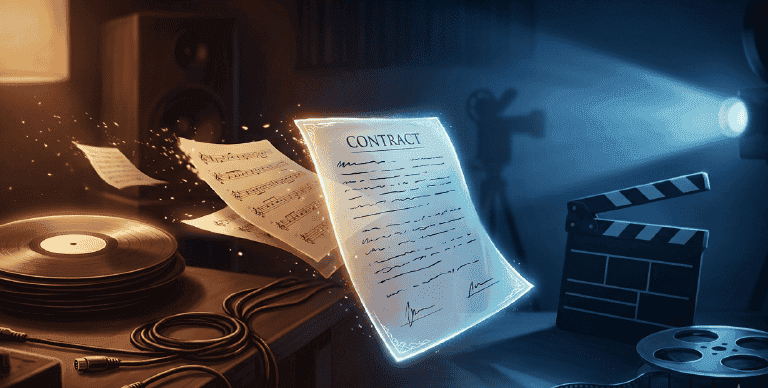
Sync licensing (short for synchronization licensing) is the legal process of pairing music with visual media — a film, a TV episode, a game or commercial. “Sync” refers to synchronization rights: the specific permission needed to lock a song to picture. Without it, a project can’t legally use the music, no matter how perfect the creative fit is. It’s a different animal from a streaming license; a sync license is a direct, negotiated agreement between a production and the people who own the song. If you’re weighing sync licensing against the other ways artists can legally use existing music, it’s worth reading side by side with this one.
1. The Boardroom Battle: Why Great Placements Die at 51%
Music supervision sounds like a dream job. Get paid to make playlists, right? Not quite. Supervisors spend most of their time playing legal detective which is exactly why the role of a music supervisor in movies is as much about contracts as it is about taste.
Master Rights vs. Publishing Rights
Every song carries two separate sets of rights:
- Master rights: ownership of the actual recording, usually held by a record label.
- Publishing rights: ownership of the written song itself: melody, lyrics, composition. Usually held by the songwriters and their publishers.
To use a song, a supervisor needs a yes from both sides. Publishing rights get messy fast, because a song can have several credited writers, each owning a slice.
Picture this: a supervisor finds the perfect track. The label says yes. Four of five songwriters say yes. But the fifth, who owns just 3% of the song, can’t be reached or says no. Sync deals generally need everyone on board. That one small holdout can kill the whole placement, and the supervisor starts over from zero. Great art means nothing without a clean contract behind it.

2. Coding the Chaos: From 30-Second Ads to Infinite Game Loops
Once the rights are cleared, the format itself becomes the problem. A song can’t just play; it has to fit the exact shape of the project.
Video Game Adaptive Audio Systems
A movie scene runs the same length every time. A video game doesn’t. A player might clear a fight in 30 seconds or get stuck in the same room for 45 minutes. To solve this, supervisors work with audio programmers to build adaptive audio systems, breaking a track into stems — drums, bass, melody, isolated from each other. The game’s code swaps these pieces in and out based on what’s happening on screen: a quiet ambient loop while you explore, a bassline once an enemy spots you, full drums and guitar once the fight starts. Done well, the music never feels like it’s looping at all.
To use a song, a supervisor needs a yes from both sides. Publishing rights get messy fast, because a song can have several credited writers, each owning a slice.
The Business of Sonic Branding Logos
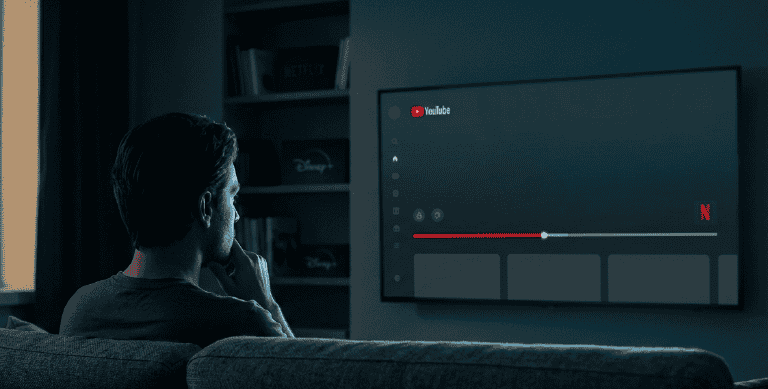
On the other end of the spectrum are ads and live broadcasts, where a single second of airtime can cost a fortune. Here, music supervisors aren’t hunting for a full song; they’re hunting for two or three seconds of sound that can trigger an instant reaction. This is sonic branding that explored the dynamics of Netflix sonic branding.
Netflix wanted a short sound that made viewers feel like they were about to get a treat. Oscar-winning sound designer Lon Bender tested twenty to thirty candidates — including, at one point, a bleating goat. The final sound layers Bender’s wedding ring knocking against a wooden cabinet with a slowed-down anvil hit and a reversed guitar phrase from sound designer Charlie Campagna, originally recorded in the 1990s.
Intel’s “bong”: Composer Walter Werzowa wrote the five-note jingle in 1994. The rhythm follows the syllables of “In-tel In-side,” built from xylophone and marimba. It’s reportedly played somewhere in the world roughly every five minutes.
The Xbox startup chime: Microsoft brought in sonic branding agency Audiobrain to capture the feeling of a console powering into a digital world. Exact costs aren’t public, but agency-built sound identities for a global console launch are a serious, sustained budget line; not a one-off session fee.
3. The Cash Catalyst: Stretching Budgets and Making Kingmakers
Because audio real estate is expensive, a supervisor’s real skill is financial survival. A recognizable rock anthem in a movie trailer can carry a fee well into six figures — manageable for a major studio, potentially fatal for an indie film’s budget.
This is where a good supervisor turns talent scout. Instead of chasing the expensive, well-known track, they find an independent artist whose song carries the same energy and emotional weight, and license it for a fraction of the cost. The brand keeps its scene and its budget. The artist gets paid and reaches an audience they couldn’t reach alone.
Sometimes this trade pays off bigger than anyone expected — a supervisor picks the right song, viewers reach for Shazam mid-episode, and a catalog track becomes a hit almost overnight. Increasingly, it’s supervisors, not radio programmers, who decide what becomes the next breakout song. The “advertising is the soul of the business” logic shows up in how tech platforms have been outspending Hollywood on marketing — worth a read if you want the bigger-picture version of this dynamic.
How to Get Your Music Synced: Agents, Companies and Submissions
If you’re an artist, the obvious next question is how to get music synced in TV shows and film. There are two main paths: a sync licensing agency/library, or pitching supervisors directly.
What Do Sync Licensing Agents Do?
A sync licensing agent bridges artists and the supervisors who need music. A good agent already has relationships with supervisors, understands what each project needs, and pitches your catalog on your behalf — usually for a commission. For artists without the time or contacts to find music supervisors themselves, an agent becomes their sales team.
Best Sync Licensing Companies for Independent Artists
- Songtradr: a large open marketplace where you upload a catalog and pitch directly, on a freemium model.
- Musicbed: curated and invite-only, known for strong relationships with premium film, TV, and ad clients; harder to join, but higher-value placements.
- Artlist: subscription-based, artists typically paid an upfront or pooled fee rather than negotiating each placement.
- Epidemic Sound: another subscription library, popular with content creators, paying through a buyout or royalty-pool structure.
In fairness, these are not necessarily the best sync licensing companies out there but they certainly should make any extensive list. Another thing is: marketplaces and curated agencies pay more per placement but accept fewer artists; subscription libraries accept more artists but pay less per use.
How to Submit Your Music for Sync Licensing
Supervisors and platforms generally want the same things: instrumentals or clean edits alongside the vocal version, clear metadata (mood, tempo, genre), full ownership clarity so there’s no 51%-veto problem later, and a mix professional enough to hold up against dialogue and sound effects.

How to Become a Music Supervisor
A growing number of composers and musicians want to move into music supervision themselves. While programs that leads towards Music Supervion as profession are springing out. The most important requirements we’ve noticed are passion for music, business and a bit of legal understanding. I have seen former musicians, producers, A&R executive become successful supervisors.
Next time the credits roll, or a console chime wakes up your living room, remember there’s an invisible architect behind that moment.
What Do Music Supervisors Actually Do?
Beyond the negotiation side above, the job usually means managing a music budget, building temp tracks for a director’s cut, negotiating with labels and publishers, and — on games and interactive projects — collaborating with audio programmers on adaptive systems.
Music Supervisor Salary and Job Outlook
Pay varies widely by experience, region, and whether the role is in-house or freelance. According to Glassdoor, typical annual pay in the US sits roughly between $70,000 and $126,000, with senior supervisors on major productions earning well above that. Entry-level roles — often titled Music Supervision Assistant — start lower and build toward full rates with a track record of placements.
Music Supervisor Courses and Famous Names to Study
There’s no single required path in, but structured programs exist — UCLA Extension runs a Music Supervision specialization covering licensing, budgeting, and the legal side of placement. Studying established boutique agencies is another fast way in: Noise/Racket, a Los Angeles-based music supervision company founded in New York in 2009, is a good example of what a smaller, selective shop looks like next to a studio in-house team.
Essentially finding yourself in music supervision as I’ve mentioned earlier, and as been noticed with a number of music supes involves having strong passion for music, interst in movies and some entertainment/business/legal knowledge — either or all.
Conclusion: The Ultimate Balancing Act
Next time the credits roll, or a console chime wakes up your living room, remember there’s an invisible architect behind that moment.
A music supervisor’s job is a constant balancing act. Without the code, the music doesn’t fit the medium. Without the cash, the project doesn’t survive. And without the chords, none of it means anything. When all three line up, it’s work that goes completely unnoticed — which, for a supervisor, is usually the whole point.