Black Thought’s opening into Act Too (The Love Of My Life) featuring Common transports me into another realm every time it played. The Next Movement made me sit differently in a chair. I knew The Light before I understood what it meant to write a love song without begging for anything.
The guitar riff from Bag Lady made me sprawl and nod at the same time. I knew Send It On wants to constantly send me into the ‘zone’. And I knew Mathematics, that flat, unbothered voice laying numbers down like an indictment, long before I knew who produced it or why the drums sat where they did.
These records found me the way music finds most teenagers: sideways, without introduction. I gravitated toward them the way you gravitate toward people you like before even knowing their names.
It was years before I learned the word “Soulquarians,” years before I understood these weren’t just songs I happened to love in the same season of my life, but pieces of the same room; the Soulquarians’ room, built by the same small circle of obsessive minds a few feet from each other at The Electric Lady Studios. Growing up on Soulquarians music, before I had that name for it, is close to a musical origin story for me.
What I didn’t have a word for then was the thing underneath it all: how much of what moved me in those records wasn’t there at all. It was what the Soulquarians left out.
Who Were The Soulquarians, and Why the Room Mattered
If the Soulquarians need explaining at all, it’s less about a lineup and more about a habit: five names, one contract, one sound to sell was never how they operated. They were something looser and more dangerous to the industry around them; a rotating circle of musicians who kept ending up in the same building, at the same hours, for reasons closer to instinct than strategy.
Questlove, Black Thought, D’Angelo, J Dilla, James Poyser; later Common, Erykah Badu, Mos Def, Q-Tip, Bilal, Talib Kweli, moving in and out of the same rooms at Electric Lady Studios, often working on separate records that sounded like conversations with each other.
The circle widened further, drawing in Karriem Riggins, Jill Scott, and Raphael Saadiq, each adding a fingerprint without needing an official title.
These records found me the way music finds most teenagers: sideways, without introduction.
The name itself was almost an afterthought; several core members happened to share the Aquarius sign, and the label stuck the way nicknames do, more out of convenience than intention. Questlove has said as much: there was never really a title, just a group of people who trusted each other’s ears more than a brief. More on the collective’s formation.

The Method, Not the Membership
What made the Soulquarians matter wasn’t the roster; rosters change, and half the interest pieces written about the Soulquarians treat it like a lineup to be memorised. What mattered was the method: musicians recording in adjacent rooms, wandering into each other’s sessions uninvited, adding a bassline here, a vocal ad-lib there, without anyone commissioning it. It was closer to a jazz loft than a modern studio session, closer to how a family finishes each other’s sentences than how a label assembles a supergroup.
That distinction matters more to me now than it did as an adolescent, because I’ve spent enough years inside studio sessions to know how rare that trust actually is. Most collaborative work in music, mine included, runs on briefs and clearly defined lanes. The Soulquarians’ method assumed the opposite: the best ideas arrive uninvited, and the room itself, not the schedule, decides when a song is finished.
Neo-Soul Was a Label, The Soulquarians Was a Family
It’s worth separating two things often conflated, especially since “Soulquarians neo-soul” searches tend to treat the two as interchangeable. “Neo-soul” was a marketing term, coined by Kedar Massenburg, the Motown executive who discovered Erykah Badu and managed D’Angelo, to give the industry a shelf for these artists. “The Soulquarians” was something the artists gave themselves, internally, almost privately; a name for the room, not the genre.
Several artists carrying the neo-soul tag resisted it outright, uneasy with the implication that soul music had died and needed reviving. The Soulquarians never needed marketing to hold together; they needed a studio with unlocked doors.
Nobody made the point sharper than Jaguar Wright, a voice in the wider Soulquarians orbit. In 2005 she titled her second album Divorcing Neo 2 Marry Soul; the title itself an argument, reading, a decade removed from Massenburg’s coinage, like the movement quietly serving its own annulment papers.
The Sound That Raised Me
Voodoo (2000), Things Fall Apart (1999), Mama’s Gun (2000), Like Water for Chocolate (2000) & What I Didn’t Know I Was Hearing
By the time I actually sat with Voodoo front to back, rather than meeting it piecemeal through whatever made it onto a burned CD or a late-night video countdown, I already loved the Soulquarians without knowing it. It didn’t announce itself the way records were supposed to; the drums dragged behind the beat like they’d rather not be there, D’Angelo’s voice sat so far back in the mix it felt like eavesdropping.
He wasn’t hiding by accident. He was singing like an instrument among instruments, disappearing into a chord change the way a horn player disappears into a section, then resurfacing with a falsetto that made the wait feel earned.
Writing this only few months after D’Angelo’s passing, I can’t talk about Voodoo without pausing on that; the record remains one of the clearest arguments for what he understood about restraint that most singers of his generation never fully grasped.
The Roots’ Things Fall Apart taught me the same lesson from a different angle, out of the same studio, its live drums and loose verses refusing the tidiness rap production usually demanded. Erykah Badu’s Mama’s Gun, recorded largely in those same rooms, carried the identical fingerprint; a groove trusted to breathe rather than snap into place, Badu’s phrasing sitting behind the beat the way D’Angelo’s voice sat behind the mix. The Soulquarians’ Voodoo album influence runs through both records plainly.
Like Water for Chocolate worked on me differently. Common’s voice was clearer, more conversational, but the record underneath had the same fingerprints; the same unhurried drums from Doin It to Nag Champa, the same sense that a song could take its time arriving at the point.
The Light had a heavy rotation on Rhythm FM and dominated JAJ Da Mecadon’s Top 7 countdown, but hearing it inside the fuller record, I understand it as one movement in a longer, more patient argument about what a love song could sound like without performing urgency it didn’t feel.
None of these records cared much for my attention span, which is exactly why they earned it. I didn’t know, at nineteen or twenty-two, that I was being taught something about restraint. It’s a version of the same lesson I came back to several years later writing about Joshua Bell’s subway experiment: talent doesn’t always announce itself, and attention has to be earned.
Neo-Soul Silence and Space: The Elements Nobody Names
Three things in particular, the Soulquarians understood about silence that almost no one else working in that decade did: a drummer’s willingness to let a beat miss the grid on purpose, a keyboardist’s willingness to let a chord die into nothing, and a singer’s willingness to let his own voice disappear inside the band. Each is worth its own look.
1. Dilla’s Swing as an Argument for Imperfection
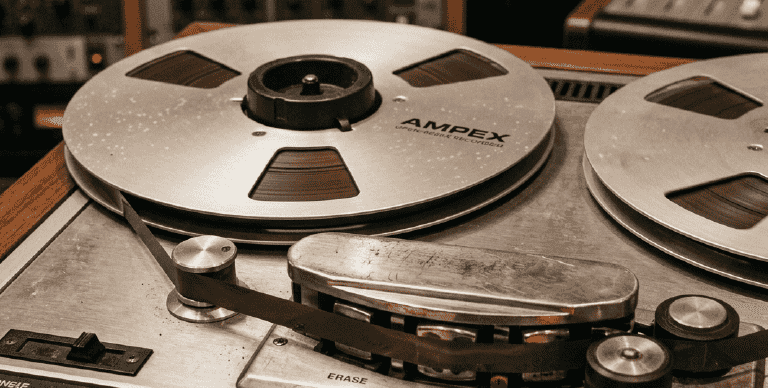
Most drum machines of that era invited you to quantize; snap every hit to the nearest beat, sand off the human hand until the rhythm sat perfectly on the grid. J Dilla, the rhythmic engine of the Soulquarians, turned that function off. He preferred to play his beats by hand on the MPC, letting the kick land a hair behind where it should, letting the hi-hat rush ahead just enough to unsettle you without ever losing the groove entirely.
People have since given it a name; Dilla Time, the drunk feel, the lean or swing. J Dilla’s swing, explained plainly: never about the notes, but the fractions of a second between them. What it actually was, underneath the mythology, was a refusal. A refusal to let the machine correct what the ear had gotten right on its own.
Of course, I didn’t understand any of this technically much ealier. I only knew certain records made me nod my head slightly off from where I expected to, and that the disorientation felt good rather than wrong. It took years of sitting at my own sequencer, watching a quantize button promise to fix something that didn’t need fixing, before I understood what Dilla had actually been arguing for. Imperfection, deliberately kept, is a kind of honesty a perfectly gridded rhythm can’t offer.

2. What the Rhodes Left Out
James Poyser’s Fender Rhodes voicings across the Soulquarians’ records rarely fill the space they’re given. A chord arrives, holds, decays, and the silence after it sits there uninterrupted, doing as much work as the notes did. That runs against the instinct most young producers are taught; when in doubt, add another layer to fill whatever gap the arrangement leaves open. The Soulquarians’ records did the opposite, trusting a listener’s ear to lean into a gap rather than lose interest.
I think about this constantly now, scoring for picture, where every unnecessary note fights the dialogue or performance for space it doesn’t need. The Rhodes chords on Voodoo and Like Water for Chocolate taught me that what you leave out of an arrangement is often the decision that defines it.
3. The Vocal That Sits Inside the Track Instead of On Top of It
Most vocal production of that period, and most since, treats the voice as the thing everything else serves; compressed forward, sitting cleanly above the mix, unmistakably the star. The Soulquarians rarely worked that way. D’Angelo’s vocal on Voodoo refuses that hierarchy, sitting level with the bass, the Rhodes, and the drums, sometimes barely distinguishable from the instruments around it. You have to lean in to catch every word, and that leaning in is the entire experience the record asks of you.
That’s a different kind of silence than the gaps between Poyser’s chords or the space around Dilla’s snare; it’s the silence of a voice declining to dominate. It asks something most pop production never does: patience, a willingness to work for the reward. The Soulquarians understood that silence isn’t the absence of content, but a decision about what the listener is trusted to fill in.
What it actually was, underneath the mythology, was a refusal. A refusal to let the machine correct what the ear had gotten right on its own.
Soulquarians Production Techniques I Employ As A Composer
I didn’t set out to build a career around lessons I absorbed as an adolescent from records I loved without fully understanding. Nobody does. But sync composition exposes exactly what you actually believe about music, because every choice has to justify itself against picture, against dialogue, against a director’s note that says “less” without explaining what less should sound like.
It was in those moments that I noticed how much of my instinct traced back to a handful of records made in adjacent rooms at Electric Lady Studios — the same instinct I somehow tried to describe when I wrote about the industry learning to pop Billie Eilishly; an artist drawing on the same faith that restraint reads as intimacy.
Scoring for Space, Not Just Sound
The most common note a composer gets, early in their development, is some version of “it feels empty here.” The reflexive answer is to add; a pad, a swell, a string line to fill whatever the silence seems to ask for. What Voodoo and Like Water for Chocolate, two of the Soulquarians’ clearest statements for example, taught me long before I was scoring anything, is that empty is not the same as unfinished.
If you ask me what made the Soulquarians sound unique, I’d point here first: not the notes played, but the ones trusted to a listener. Sometimes a scene needs the absence more than the cue; sometimes the most useful thing I can hand a picture is restraint dressed up as a decision.
I catch myself now, mid-session, reaching for the same instinct Poyser seemed to trust on those Rhodes voicings; let the chord land, let it decay, don’t rush to answer the silence that follows. It doesn’t always survive the edit; directors have their own relationship with space. But the instinct itself, to ask what a cue could leave out before asking what it should add, never left me.

What a Cue Sheet Owes to a Pocket
There’s a strange kinship between a Dilla pocket, that signature Soulquarians move, and a cue sheet. A pocket is a decision about where, exactly, a beat should sit in relation to everything around it; not on the grid, but deliberately, in service of a feel the grid alone can’t produce. A cue sheet, at its best, asks the same question of a piece of music in relation to a scene; not where the theory says the cue should hit, but where the moment needs it to land.
I don’t program my drums the way Dilla did; sync work rarely allows for that kind of loose-handed performance. But the logic survived the translation. Every time I resist a metronome’s insistence that a hit belongs exactly on a frame marker, and let it breathe a beat later because that’s where the emotion of the scene lives, I’m running the same argument Dilla ran with his MPC decades earlier, wearing different clothes.
What The Soulquarians Still Teaches
If you’re still asking why the Soulquarians matter, I’d point you back to the records, not the résumé. I still don’t think of the Soulquarians as a group I discovered so much as a room I wandered into without knowing its name. The Next Movement, You Got Me, The Light, Nag Champa, Devil’s Pie, How Does It Feel, Didn’t Cha Know, Mathematics; these were simply the sound of being young and paying attention, years before I understood that attention was the entire lesson.
What the Soulquarians actually left me with wasn’t a sound to imitate; plenty of producers have chased the swing or the Rhodes voicing without asking why those choices existed. The Soulquarians’ influence on modern producers lives exactly there: between imitating the texture and understanding the restraint beneath it.
What they left me with was a posture toward silence: a belief that restraint isn’t the absence of a decision but one of the strongest decisions available. Dilla trusted the space between the grid and the groove. Poyser trusted the space after a chord. D’Angelo trusted the space between a voice and the instruments around it. None of it was empty. All of it was the Soulquarians’ real argument, made quietly, decades before I had the vocabulary to explain why it moved me.