Ugh! Artist’s Achilles heel? “What does that even mean?” and “what has that got to do with composing music” are probably what someone with no intention to read this piece would hurriedly ask, tasting the sarcasm they already know I intend. I brought it on myself, so run, my thoughts must.
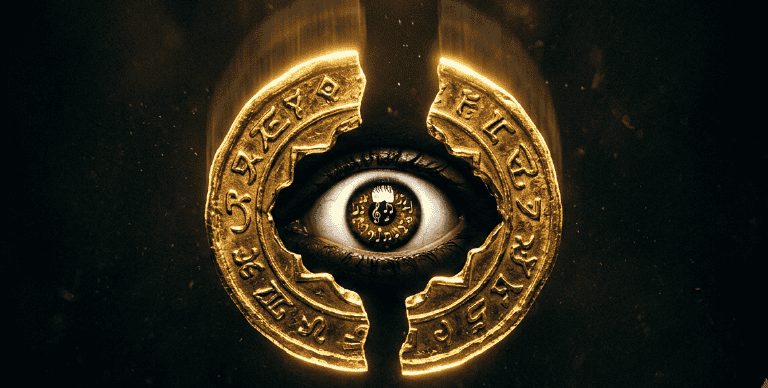
Plain and simple, an artist’s Achilles heel is that one vulnerability that exists within their greatest strength. In this case, an artist could be a musician, producer, painter, athlete, actor or celebrity. Think about it: an artist’s power comes from the work, money, fame and influence they wield, but this same power, in its raw form, can become their biggest threat, especially when it becomes intoxicating.
Naturally, I’m fascinated by fantasy, mythology and the like, and of all the legends and tales from history and alternate history, one that stands out most for me is that of Orpheus. You know, him being a god-level musician and the ultimate example of a “loverboy”. The idea of someone going to Hell to get his “girl” back is out of this world. Musicians sing about it a lot, but Orpheus actually did it.
By the way, the phrase Achilles heel was derived from Achilles, who is described in Greek mythology as a demigod and one of the greatest warriors of his era. According to the story, Achilles was vulnerable only in the heel, a vulnerability we’ll use as a metaphor in this piece.
This article is not just a recount of stories that date back over 3,000 years, but also a look at how we can relate them to current events; especially how they apply to creatives, musicians, artists and even you.
A quick listen to songs like Ain’t No Mountain High Enough by Marvin Gaye & Tammi Terrell, A Thousand Years by Christina Perri, Can’t Take My Eyes Off You by Frankie Valli and Iris by Goo Goo Dolls, and you’d discover lyrics pattern describing doing the impossible. Expressions such as “I will give you the stars”, “I’ll swim the ocean” and “go to the end of the world for you.” Musicians and poets often sing about going to Hell and back for love. Orpheus was the ultimate reference point for all of these ballads summed up.
Who Was Orpheus? A Quick Lookback
Orpheus is one of the famous figures in Greek mythology, renowned for his extraordinary musical talent, poetic ability and tragic love story. His music was so beautiful and powerful that it charmed not only humans but also wild animals and even inanimate objects. It’s said that rivers would pause and the most ferocious beasts would grow tame in his presence; sounds crazy, right?
This article is not just a recount of stories that date back over 3,000 years, but also a look at how we can relate them to current events
To put it short, Orpheus symbolises the power of music and poetry to transcend boundaries, even between life and death. He was the artist that other artists looked up to. The major stories about Orpheus include the tales of him and his lyre, him with Jason and the Argonauts, and him and Eurydice.

Jason and the Golden Fleece
I can’t remember exactly when I first learned about Orpheus, but I put a face to him the first time I saw Jason and the Argonauts (2000), the Hallmark Entertainment mini-series where Adrian Lester played Orpheus. The film is a retelling of Jason embarking on a perilous voyage to retrieve the Golden Fleece, a golden wool garment with mythical powers.
Jason approached Orpheus to join his carefully selected team of strong and skilled men, also known as the Argonauts, on the quest for the Golden Fleece. Orpheus’s music proved invaluable throughout the journey: most notably by drowning out the dangerous songs of the Sirens and protecting the Argonauts from their charms, and again later at Colchis, where he plays the dragon guarding the Fleece into a deep sleep so Jason can claim it. Two crises, two rescues, both by music and not swords.
There’s something in those scenes I recognise as a composer myself. Orpheus’s music wasn’t just performance; it had a job to do inside someone else’s story: cutting through danger, holding a crew together, serving a moment bigger than the song itself. That’s not far from what happens when you score for film or place a track inside someone else’s narrative. The music isn’t the whole story; it’s there to carry a scene, protect a mood, do work the dialogue or the picture can’t do alone. Orpheus understood that before anyone had a word for sync, licensing and the dynamics.
Orpheus and Eurydice: The Achilles Heel
According to the story, Orpheus married the beautiful nymph Eurydice. Tragically, shortly after their wedding, Eurydice died from a snakebite. Overwhelmed with grief, Orpheus used his unparalleled musical gifts and bravely descended into Hades, the Underworld, the realm of the dead.
He charmed Charon, responsible for ferrying the souls of the dead, and Cerberus, a three-headed guardian dog, with his music. His mournful songs moved even Hades and Persephone, the kidnapped daughter of Zeus and Demeter, who ruled the Underworld together. They were so touched that they agreed to let Eurydice return with him to Earth.
There was a condition, however: Orpheus had to walk ahead of Eurydice and not look back at her until they had both reached the upper world and seen the light of day. As they neared the surface, Orpheus, out of an impulse to check if Eurydice was still with him, or in his excitement to reach sunlight, looked back, and Eurydice instantly vanished back into the Underworld, lost forever.
Tragedy and the Underworld as Metaphor
The story of Orpheus and Eurydice is that of a power couple whose love and status reached a high point almost as quickly as it collapsed into their lowest. One moment they were enjoying the best of life, fame, wealth and social status; the next, they were living in Hell. This is the artist’s Achilles heel taking shape in real time.
Think about it: a journey into the Underworld could be likened to a descent into depression, addiction or mental health challenges. The struggle to find sanity after losing oneself can create all kinds of underworlds, where escape seems impossible.
Celebrities and artists, in their quest for success and fame, get involved in shady and oftentimes deadly situations. The music industry can be very rewarding, but also damning, for artists seeking shortcuts and ending up in the wrong circles, where deals are made with the devil…
A lot of artists are guilty of these character flaws; it’s just that some flaws are minor, or not exactly criminal in nature
The Fatal Flaw: The Orpheus Fall
The difference between sanity and insanity is in the “in.” An overlooked series of actions and lifestyle choices, dismissed as mere “flexing,” could be the beginning of the end for a super-talented and successful act. Sometimes artists and celebrities do things unheard of, abusing their privileges without repercussion, so often that it starts to seem normal to an observer. This is the artist’s Achilles heel at its most literal.

We’re all aware of notable cases of celebrities and artists who slid into messy situations they should never have been in, despite everything money and status could buy them. You’d wonder what kind of woman R. Kelly, the self-proclaimed king of R&B couldn’t have afforded to “hang out” with, or how Diddy found himself entangled in a web of sex trafficking charges and time behind bars. There are so many cases like these.
Sexual offences appear to be the most common among male celebrities and artists, either because they’re easy targets or because of careless choices. Other times it’s drugs or other crimes, like shootings and assaults. Some even do ridiculous things, like buying luxury items on the strength of their “status” with no intention of paying, as in the recent case of Sean Kingston.
A lot of artists are guilty of these character flaws; it’s just that some flaws are minor, or not exactly criminal in nature. I was chatting with an up and coming artist recently, and he said he could never go down that path if he became successful. I told him: don’t claim to be a warrior if you’ve never been to war. I guess it goes with the idea that power will intoxicate, and absolute power may intoxicate absolutely.
The Aftermath: Death of Orpheus
After losing Eurydice for good, Orpheus lived in despair, shunning other women. He was eventually torn to pieces by a group of Maenads, female followers of Dionysus, who were said to have been enraged because he rejected them. When he died, his head was still singing as it floated down a river to the island of Lesbos.
An artist’s fall is often irrecoverable. It would take serious reform, renewal and even rebranding to come close to a glorious version of oneself again. In other words, a return from the “underworld” may not translate to a return to sanity.
The Achilles Heel: In the End
The concept of the artist’s Achilles heel is a reminder that sometimes, inside our greatness, lies a weakness that can get the best of us. Our passion can bring about our downfall if we aren’t deliberate with our life choices. While women are among the most beautiful things in the universe, kingdoms have turned to dust because of the uncontrollable lust of men for them.
Orpheus’s story is a beautiful, brutal reminder that even in our greatest moments, a simple slip-up could turn everything we’ve ever stood for or worked for into rubble; and this doesn’t apply to just artists, but to anyone with any semblance of greatness.
I think about this a lot in my media composition work, scoring other people’s stories. The artists whose catalogues age well, whose music still gets licensed and trusted decades later, tend to be the ones who kept their guard up when it mattered. A song outlives a scandal, but a reputation is part of what gets licensed too. Orpheus’s real mistake wasn’t looking back; it was letting the moment override the discipline that got him that far in the first place.
That’s the artist’s Achilles heel: not the fall itself, but the complacency that sets in the instant the guard comes down. It’s a lesson worth keeping close, whether you’re descending into the underworld for love or just walking into a session, a deal, or a spotlight.