This is Part 2 of a look at how the lyrics industry evolved. The Part 1 covers Musixmatch, Genius, and LyricFind; the platforms that professionalized the space this piece traces back to.
OHHLA vs Genius is a comparison that goes back further than most people realize; in my case, back to my own teenage attempts at rapping.
Sometime in the 2000s, as an aspiring rapper still figuring out my own pen, I spent a fair bit of casual time transcribing verses for OHHLA: the Original Hip-Hop Lyrics Archive. Nothing formal, just the kind of thing you did if you cared enough about getting a line exactly right. Looking back at the site now, it hasn’t changed much since. That’s not a knock on memory — it’s just genuinely, verifiably still that site.
If you were looking up rap lyrics online before 2010, there’s a good chance you landed on OHHLA too. Long before Genius existed, OHHLA was the place. It’s still online today, still getting updated, and still looking almost exactly like it did back then; unfortunately that’s not a compliment.
OHHLA vs Genius isn’t really a story about which site has better lyrics. It’s a story about what happens to a platform when the internet changes. And once you dig past the surface-level “one has annotations, one doesn’t” comparison, a more interesting pattern shows up: OHHLA and Genius (Rap Genius) weren’t just two sites that made different design choices. They faced the same industry-wide threat at the same time, and came out the other side in completely different shape.
OHHLA Came First, and It Mattered
OHHLA launched in 1992, around the same time the internet itself was finding its feet. For an entire generation of hip-hop fans, it was the only reliable place to find accurate rap lyrics, at a time when liner notes were often the only alternative. It wasn’t just a footnote in hip-hop’s internet history, it directly shaped what came after it. One of Rap Genius’s own founders has said publicly that OHHLA was “a huuuge inspiration,” and admitted to spending hours on the site trying to memorize verses before Rap Genius existed in any form.
In other words: without OHHLA, there may not have been a Rap Genius to eventually become Genius.

Same Site, Different Decade
Here’s where the comparison gets interesting. A visit to OHHLA’s website today and you’ll find a site that still identifies itself as “a Flash Web Design” (I know because I made Flash websites myself.) The layout, navigation, and submission process are largely unchanged from the early 2000s. Lyrics still get added, but through a manual process and the categories reveal exactly which internet era this system was built for.
Genius, meanwhile, took the opposite path at almost every fork in the road:
- OHHLA stayed genre-specific. Genius broadened from rap-only to every genre, then briefly into poetry, historical documents, and news.
- OHHLA stayed static. Genius built a points-based contributor system (Genius IQ), tiered editor roles, and an entire interview series (Verified) turning lyric annotation into a media format.
- OHHLA stayed manual. Genius built licensing infrastructure, a browser extension, and eventually a monetization stack of ads, sponsorships, and data partnerships after being acquired by MediaLab in 2021.
- OHHLA stayed a destination. Genius tried, with mixed success, to embed itself into the wider web rather than just waiting for visitors to show up.
That list alone makes for a tidy “one evolved, one didn’t” story. But it skips over the part that actually forced Genius’s hand.
The Legal Fork in the Road
In November 2013, the National Music Publishers’ Association sent takedown notices to fifty unlicensed lyrics sites, based on a study ranking the worst offenders by how aggressively they profited from copyrighted lyrics without paying songwriters. Rap Genius didn’t just make that list; it topped it, scoring higher than every other site on the list for unlicensed, ad-supported lyric reproduction.
In other words: without OHHLA, there may not have been a Rap Genius to eventually become Genius.
That’s an important detail missing from the tidy “Genius innovated its way to the top” narrative. Rap Genius wasn’t evolving purely out of ambition. It was evolving because its entire content model — reproducing copyrighted lyrics without publisher agreements — was legally unsustainable, and the NMPA had just proven it was willing to sue sites into the ground to make that point. The pivot toward licensing deals, publisher partnerships, and eventually a legitimate data-licensing business wasn’t just smart strategy. It was survival under legal duress, dressed up afterward as strategy.
That reframes the whole comparison. Genius didn’t simply choose to evolve while OHHLA chose to stay still. Genius was threatened with the same fate other unlicensed sites had already suffered and it had the resources, timing, and investor backing to restructure itself around a real licensing business before that threat became fatal.
The Case That Didn’t Survive the Shift: LyricWiki
To see what happens when a site can’t pull off that transformation, look at LyricWiki. It was hit by licensing pressure from the same music publishers early on, and initially seemed positioned to compete; it had a wiki-style community model, a public API, even a Facebook quiz game built around its database.
Instead of restructuring into a durable licensed business, LyricWiki was forced to restrict its own public API as early as 2009 under publisher pressure, cutting off the very feature that had extended its reach into other apps and services. The site limped on in a reduced form for another decade before Fandom shut it down entirely in 2020, citing the rising cost of licensing relative to what the wiki actually earned.
LyricWiki is the case that complicates any simple “evolve and you’ll survive” moral. It did evolve, in the sense that it was forced to restructure under the same legal pressure Genius faced. It just didn’t evolve into anything that mattered as much afterward. Being forced to change is not the same as changing well.
Why OHHLA Might Have Survived by Staying Still
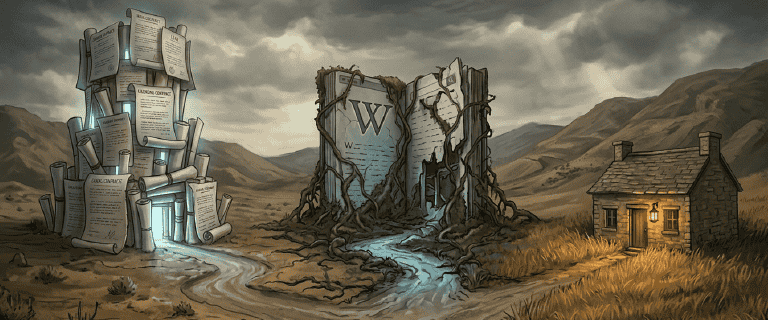
Which brings us back to OHHLA, and a more generous read of why it never modernized. The same 2013 NMPA report that named Rap Genius as the top offender also noted that at least one small, low-traffic lyrics site had “flown under the radar” of enforcement entirely — not because it was doing anything differently, but because it was too niche and too uncommercial to be worth the legal effort.
OHHLA fits that same profile. It never built an advertising business aggressive enough to attract the kind of attention Rap Genius did, and it never scaled into the kind of traffic numbers that made LyricWiki worth licensing pressure either.
Genius, meanwhile, took the opposite path at almost every fork in the road:
Seen that way, OHHLA’s stagnation looks less like negligence and more like a passive survival strategy: stay small, stay niche, stay unmonetized enough that nobody with legal resources thinks you’re worth the fight.
It’s not an accident that the site’s most jarring modern feature is a scattering of unrelated ads for essay-writing services and online casinos rather than any real ad network; a sign of minimal active stewardship, not a deliberate business model, but also not the kind of infrastructure that draws a publisher’s lawsuit.
Three Fates, One Industry Shift
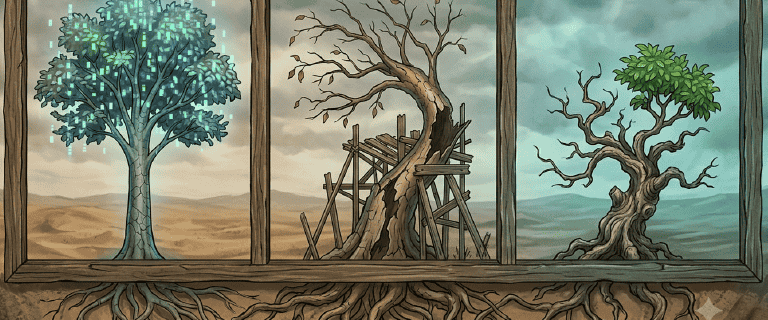
Put side by side, these three sites map out almost every path a content platform can take when its underlying business model comes under existential pressure:
- Genius evolved deliberately and at scale: new content categories, a community reward system, a licensing business, eventually an acquisition and came out as a legitimate, if imperfect, media company.
- LyricWiki was forced to evolve under duress, made structural concessions to survive legally, and lost the product identity that made it worth using in the process.
- OHHLA never evolved at all, and arguably survived precisely because it never grew large enough to be worth forcing.
None of these are purely “right.” Genius has more reach, more monetization, and more relevance today than either of the other two, but it also carries the baggage of a company that’s changed hands, changed identity, and leaned harder into ads and licensing deals than some early users wanted. OHHLA has none of that baggage, and none of that reach either.
What This Means if You’re Actually Choosing a Lyrics Site
If you’re looking for a Genius alternative for lyrics today, OHHLA still technically qualifies. It still has lyrics, it’s still free, and it’s still updated. But the more useful takeaway isn’t which site to bookmark. It’s that “not evolving” and “failing” aren’t automatically the same thing, and “evolving” isn’t automatically a success story either.
The lyrics sites that survived the 2013–2016 licensing shake-up did so through three genuinely different strategies, not one correct playbook and understanding which strategy a platform chose tells you a lot more about what you’re actually using than a simple feature comparison ever could.
A Few FAQs People Actually Ask & My Responses
What Happened to LyricWiki?
Music publishers pressured LyricWiki into cutting off outside developer access to its lyrics database back in 2009, years before the site eventually closed. It kept running in a stripped-down state under Fandom’s ownership until 2020, when the company decided the licensing bill no longer made sense to keep paying.
What Was the NMPA Lyrics Lawsuit?
The National Music Publishers’ Association ran an enforcement campaign against dozens of lyrics sites reproducing copyrighted text without paying songwriters, using a public scoring system to single out the worst offenders. That naming, more than any courtroom filing, forced several sites to rethink their business model entirely.
Why Did Rap Genius Get Sued?
“Sued” slightly overstates it. Rap Genius was publicly named and pressured rather than dragged through a courtroom. Publishers flagged it as the most flagrant unlicensed lyrics site in a 2013 industry report, which is what pushed the company toward the licensing deals it depends on today.
Is OHHLA Still Around?
Yes. OHHLA is still online and still updated today, decades after launching in 1992. It never modernized its design or added community features, but it also never attracted the licensing scrutiny that shut down bigger sites, largely by staying small, niche, and largely unmonetized.
If you like the series pattern, you might also want to check out a trilogy which started with a Netflix sonic branding piece. The three parts posts didn’t just focus on song lyrics but took songs, music composition and branding to another dimension. You can also read why your AI music might really not be yours. I hope you find it interesting too.