The difference between Afrobeat and Afrobeats is not just in the “s,” apparently a lot of people don’t seem to get it these days. I have heard, seen and read narratives gravely overlooking or genuinely oblivious of this significant difference. I’m constantly bothered when this single error is loosely committed. It becomes worse when major media, news outlets and even streaming platforms are caught committing the sin — it becomes unforgivable!
Imagine an Apple Music or Spotify playlist with the title “Afrobeat Finest” for example listing Burna Boy, Rema, Wizkid, Davido, Tiwa Savage, Tems, Asake, Ayra Starr etc, I’m like what were their editors smoking? To hit the bullseye, there was some sort of “trash talk” recently on Twitter/X — a comparison between Fela Anikulapo-Kuti and Wizkid. It doesn’t even matter how it started but it was the height for me, an absolutely crazy comparison. That “argument” planted the seed of this piece.
Afrobeat vs Afrobeats: The Difference Explained broke it down. Charles Anyiam dissected it further with several other pieces written about it, but the fact that people carry on with the mix-up simply mean the messages are not getting across. For those who don’t know or forgot, Afrobeat is the music genre championed by Fela Anikulapo-Kuti, often laced with political undertones, speaking truth to power and correcting social injustice. Afrobeats, meanwhile, is the absurd “boxing” of contemporary/urban African music typically from West Africa.
Fela Kuti and the Birth of Afrobeat
For perspective, we must go back to early 1970s Lagos. The era marked the birth of Afrobeat. The term belonged entirely to Fela Anikulapo-Kuti. He synthesized traditional rhythms with Western sounds to create a brand new movement. There was some talk about Orlando Julius being responsible for coining the word, but Fela made it popular — whatever the case, both were super-talented performers in their lifetimes.
Anyone who followed Fela for a bit would have read how he was sent to London to study law, but went rogue, secretly enrolling at the Trinity College of Music instead. There, he immersed himself in classical music and jazz, forming his first band, the Koola Lobitos, which blended highlife with jazz rhythms.
The turning point came during a tour of the United States. Exposed to the Black Power movement, Fela completely re-imagined his sound. He fused traditional African rhythms, highlife and jazz into a brand-new, politically charged genre. He renamed his band Africa 70, birthing Afrobeat, a raw, hypnotic style built on complex, fierce social commentary.
The Sonic Elements of Modern Rebellion
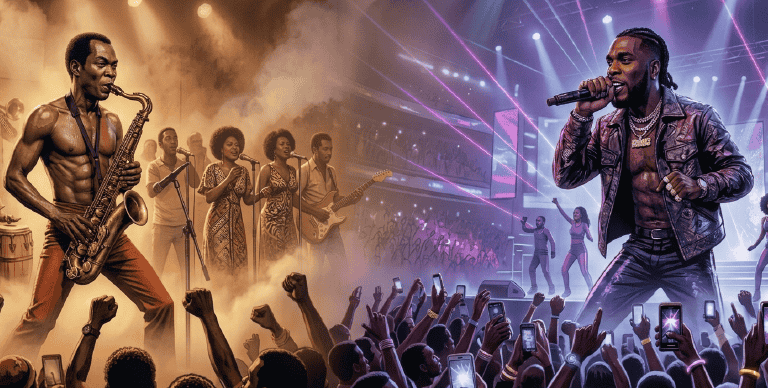
Driven mainly by live instrumentation, Afrobeat features a massive 15-piece band “grinding” on stage. At the absolute core of this sound is Tony Allen’s drumming, which created unmistakable, complex polyrhythms that anchor every track.
Layered over these heavy drum rhythms are sweeping jazz horn sections. The brass instruments blare in sharp, synchronized patterns. Fela himself guides the band, often shifting between the sax and the electronic organ. The music builds slowly, layer by layer, creating walls of sound that demand your attention.
Music as a Weapon: The Political Weight
Fela’s Afrobeat was never created just for casual dancing. It was inherently anti-establishment and counter-cultural. Fela viewed his art as a literal weapon against oppressive systems.
During the 1970s and 1980s, Nigeria suffered under brutal military regimes. Fela used his songs to launch direct attacks on military corruption and state violence. He sang in Pidgin English so the masses could understand his message. He sang about police brutality, government theft and the scars of colonialism.
Fela’s bonds with African icons like Hugh Masekela, Manu Dibango, and Ghanaian guitarist Ebo Taylor were rooted in a shared quest for musical liberation. While Taylor collaborated with Fela during their early London jazz days, heavily shaping the structural foundations of Afrobeat, Masekela and Dibango later frequented Lagos to jam at the Afrika Shrine. Bridging anti-apartheid jazz, smooth Afro-jazz and Ghanaian highlife with Fela’s rigid grooves, these visionaries collectively cemented a unified, revolutionary era for continental African music.
Because of this political weight, the music carried immense danger. The government saw Fela as a major threat. The military repeatedly raided his home and commune, the Kalakuta Republic, as well as his venue, the Afrika Shrine. They arrested Fela dozens of times and beat him severely. Yet, his music never softened. Every horn blast and drum remained a fierce cry for human rights and social justice. You can feel the hurt when Fela is compared with Wizkid.

The Evolution: How Afrobeat Became Afrobeats
As the 21st century arrived, a massive wave of new club sounds emerged from West Africa. The “Afrobeats” label goes back to the early 2010s within the UK diaspora. Broadcasters and DJs needed a catchy marketing term for this fresh, youthful sound. They lazily added a simple “s” to the end of Fela’s genre. With that single letter, a new era of West African pop music was born.
From Fela to Burna: Going From Live to Loops
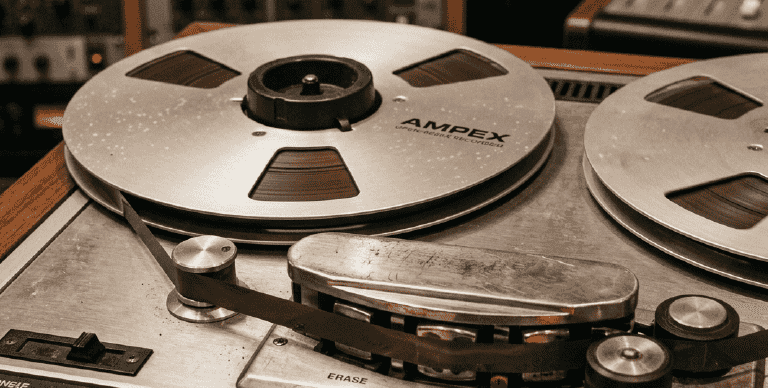
The sonic difference between the two eras is massive. Classic Afrobeat relied heavily on live bands. Its modern offspring, Afrobeats, relies on DAWs.
Today, producers construct tracks using loops and samples. The sprawling jam sessions of the past are entirely gone. Instead, contemporary creators engineer short, radio-friendly three-minute-mark tracks. These songs are tailor-made for the algorithms of Spotify, Apple Music, TikTok, etc.
A catchy, fifteen-second audio snippet can launch a global dance challenge overnight. The raw, analog friction of live instruments has evolved into a polished, digital playground designed for maximum replay value.
The Global Explosion: Wizkid, Burna Boy and Davido
The modern Afrobeats movement has transformed from a West African staple into a dominant global force, a meteoric rise spearheaded by Nigeria’s “Big Three.” By blending traditional rhythms with contemporary pop, dancehall, and hip-hop, these artists have packed international arenas, topped global charts, and permanently redefined the soundscape of popular music.
Who Are the Big Three of Afrobeats?
The “Big Three” of modern Afrobeats, as they’re often called, are Wizkid, Davido, and Burna Boy. Emerging in the early 2010s, this dominant trio propelled the genre into a global phenomenon. Wizkid made history with features on global chart-toppers like Drake’s “One Dance,” Davido consistently delivered massive, infectious club anthems across the diaspora, and Burna Boy secured a Grammy award with his distinct, politically conscious “Afro-fusion” sound — perhaps the only one of the three who came closest to the path Fela walked.
This pivot completely revolutionized contemporary African music. A powerful trio pushed the sound into the global mainstream. Wizkid, Burna and Davido became household names far beyond the African continent.
Is Wizkid Afrobeat or Afrobeats?
For some reason, people do actually ask this type of question. It’s a by-product of the Twitter argument I mentioned earlier, and probably the core reason for penning this post. Now to the answer: Wizkid is Afrobeats. He creates modern, pop-infused global music, distinct from the politically charged, traditional 1970s Afrobeat pioneered by Fela Kuti.
The Diaspora Identity Crisis: Is “Afrobeats” Too Broad?
The global success of this music brings a brand new dilemma. Many modern Afrobeats artists strongly resist this generic umbrella label. They argue that the Western music industry uses the term as a sonic blanket. It forces entirely different genres into a single category simply because the creators share the same geographic continent.
This categorization completely ignores the rich, sonic diversity of the current Nigerian music evolution. For instance, South Africa’s Amapiano sound has its own distinct cultural roots. Similarly, the indie-leaning Alté scene and Hip-Hop in Lagos, Jos, and Kaduna feature a completely different aesthetic. Even top superstars reject the mainstream tag in favor of specific self-definitions.
Grouping these distinct artistic movements together creates a massive cultural monolith. It erases the unique identities of creators who are pushing boundaries. Reducing an entire continent’s creative output to one catchphrase does a massive disservice to the art form.

Who is the Father of Afrobeats?
Unlike Afrobeat, which Fela Kuti pioneered, contemporary Afrobeats has no father per se. Its sound took shape in Nigeria through the 2000s, well before the “Afrobeats” label was popularized by the UK diaspora in the early 2010s. It was built by a collective of visionary Nigerian producers and artists like JJC & 419 Squad, AY, The Remedies, Plantashun Boiz/2Face, MoHits/D’banj, DaGrin and more, who digitized West African grooves for the global stage.
Afrobeat and Afrobeats: Vocabulary of the Culture
The very existence of the Afrobeat vs. Afrobeats debate is evidence that the two genres are completely different, even though they share a similar sound and the same cultural origin. Modern artists do not create their music in a vacuum. Instead, today’s superstars stand directly on the broad shoulders of past pioneers.
Contemporary Afrobeat remains important still, thanks to the continued push by the likes of Femi Kuti, Seun Kuti (Fela’s seeds), and the American-based Antibalas, alongside the heavily-charged, brass-and-live-percussion sound of artists like Made Kuti, Dele Sosimi, Kokoroko, and Newen Afrobeat. These sit side by side with the digitized, pop-infused rhythms of Afrobeats from the likes of Wizkid, Burna Boy, Davido, Rema, Tiwa Savage, Tems, and others. Rather than competing, the two genres continue to flourish concurrently, creating a rich, symbiotic continuum that honors historical roots while impacting global pop culture.
Ultimately, using the correct term shouldn’t be a debate. It is a fundamental matter of proper placement and cultural respect. When you accurately separate Afrobeat and Afrobeats as two distinct genres, you honor the history, sacrifices, political struggles, and brilliance of the creators behind them. We must choose our words carefully and respect the vocabulary of the culture.
Got time for a few more reads? Consider one or more of either Joshua Bell Experiment, From Themyscira to Wakanda, or The Artist’s Achilles Heel. While they all hold views from different perspectives, there is no doubt in my mind you will find them interesting.